

“The success of students with disabilities, on completion of their education, depends greatly on the ability of educators, supportive parents, community agencies, and employers to prepare these students with the skills, understanding and career opportunities that are needed to become independent, productive, happy and tax-paying adults.”
Robert Muller (Muller, 1995)
WHAT MAKES IT WORK
Ten factors behind
the program
“Next Step” program is credited to a number of diverse factors that worked together to effectively realize the achievement of its goals despite starting off with minimal resources.
01
First and foremost, it is the
adoption of the program under the
umbrella of AUB-CEC. “Next Step”
students enjoy access to AUB’s
discriminatory-free campus and
inclusive physical space in addition
to the access to online and offline
resources and learning materials.
02
Highly esteemed and qualified
guest speakers are interested in
providing both awareness lectures
as well as hands-on activities.
03
Parents, too, provide the necessary
support for the students during
social activities, events, and
presentations, in addition to
homework and assignments.
04
Successful internship and training
at workplaces generously offer
their expertise.
05
“Next Step” is based on a Certified
US Program that consists of a fully
tested and developed educational
curriculum that is regularly
reviewed and improved.
06
The program fills a gap in the
education of students with
intellectual disabilities
07
It involves social interaction,
engagement, and active learning,
as well as activities and stimulating
friendships that boost the
students’ self-esteem and social
performance
08
Teachers are equipped with all the
tools needed to support the
students’ success
09
Course objectives are supported
and achieved with combined multi-
disciplinary educational resources
10
The program is built and
implemented with the
collaboration of many
companies, agencies, institutions
and enterprises
NEXT STEP COURSES: LIFE CENTERED
EDUCATION CERTIFICATE
Curriculum Overview
The program spans over a period of three years that include academic courses with functional objectives as well as vocational preparation. During the course of their study in the second and third years, the students will be expected to do internships in selected business platforms and as per their career choice. The curriculum is primarily based on the Life Centered Education objectives as published by the Council for Exceptional Children (CEC). Its mission is accomplished through advocacy, standards, and professional development. At the end of the three years program the students will receive a certificate of completion from the Continuing Education Center.

Functional Math & Money
Management Course
This course provides a comprehensive
foundation in basic mathematics,
gradually building skills in counting,
arithmetic, and problem-solving, all
while incorporating practical aspects
as part of money management such
as currency recognition and real-
life scenarios.

Self Determination And
Interpersonal Skills Course
This course helps students develop
self-awareness, self-confidence,
socially responsible behavior, good
interpersonal skills, independence,
decision-making and good
communication skills

Daily Living Skills Course
This course teaches students how to
manage personal finances (including
using credit cards, check cards, etc.),
household management, personal
needs, family responsibilities, food
preparation, citizenship responsibility
and leisure activities.

Employment Skills Course
This course Opens the door to
employment possibilities and choices
for our students in the 21st century, by
teaching them appropriate work
habits, how to seek and maintain
employment, physical/manual skills,
and specific job competencies.

Therapeutic Art Course
This course offers students a safe and non-judgmental space to explore different art materials, marks, forms and colors. Through sensory experiences, students find non-verbal ways to express themselves and engage in the creative process. Therapeutic art emphasizes the process rather than the end result, the enjoyment rather than the pressure of perfection and the attunement to ones’ needs rather than the adaptation to others’ expectations.

Therapeutic Art Course
This course benefits individuals with special needs because it facilitates the use of different means of self expression. It is sensitive to the fact that verbal communication is taken for granted and that not everyone can communicate ideas, thoughts and feelings verbally. In that sense, it encourages individuals to use movement, gestures, creativity and play among many other modalities to express themselves and interact with each other.
ON THE JOB
Internships
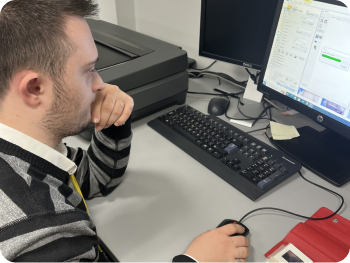
The students are required to perform internship hours in selected establishments. The first phase is an exploration phase where students will conduct several field visits to different establishments and learn more about work, jobs, and career choices.
Later in the program the students will be required to fulfil a required number of internship hours in these establishments. By the end of these internships, students are expected to have a good idea about their career choice for which they can seek employment or further development.


ON THE JOB
Internships
The students are required to perform internship hours in selected establishments. The first phase is an exploration phase where students will conduct several field visits to different establishments and learn more about work, jobs, and career choices.
Later in the program the students will be required to fulfil a required number of internship hours in these establishments. By the end of these internships, students are expected to have a good idea about their career choice for which they can seek employment or further development.

IC Cafeteria

Spinneys Signature
Downtown

Digital Department @
Jafet Library

AUB Casper &
Gambini Cafeteria

OSB Cafeteria
Grab’n Go Bliss
AROUND THE PROGRAM
Services and support

Scholarships and Financial Aid
A limited number of scholarships and
financial aid is available.
Advocacy and Awareness
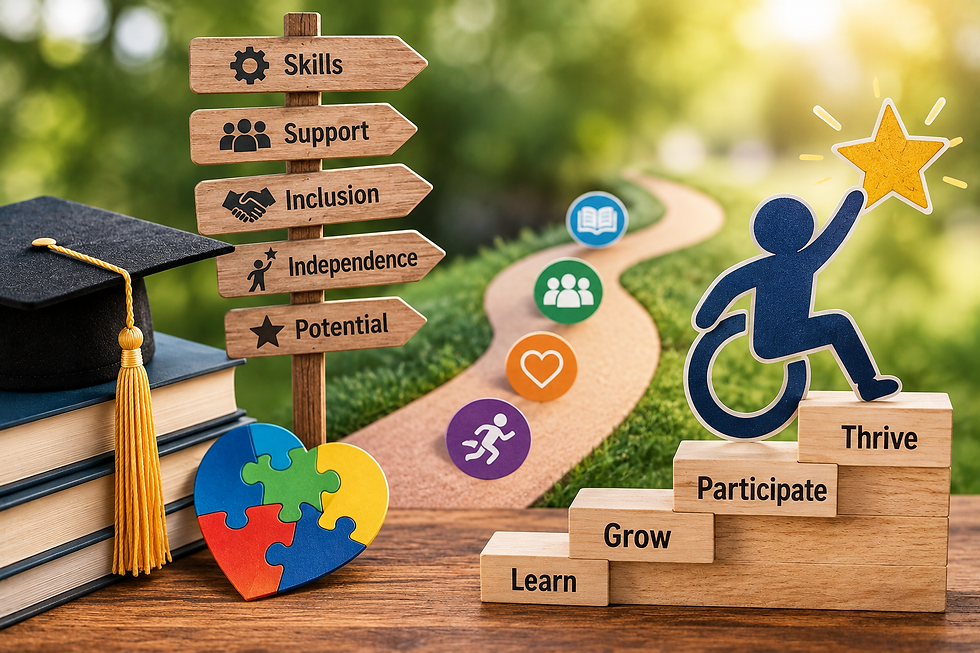
The Next Step Program empowers adults with intellectual disabilities through essential skills, resources, and support. Through on- and off-campus activities, we promote inclusion, empathy, and independence while helping individuals reach their full potential.

Family Support Services
Strong family support is key to the success of the Next Step Program. Families provide encouragement and guidance, helping participants achieve their goals and celebrate their progress. Together, they create a supportive environment that empowers individuals to reach their full potential.

Employment Services
“Work is the most important and central adult activity in our society.”
— Robert Muller (1995)
The program prepares students for employment through workplace skills, training, internships, and apprenticeships. We partner with businesses and organizations to create job opportunities and support students throughout their transition into the workplace.

Education
The Next Step Program is a university-based inclusive program supporting youth and adults with learning and intellectual disabilities, autism spectrum disorders, and other developmental challenges. We focus on each student’s strengths, provide support where needed, and believe education is a right for all.
Students enjoy opportunities to participate in AUB’s clubs, activities, and social life, helping them build confidence and independence.